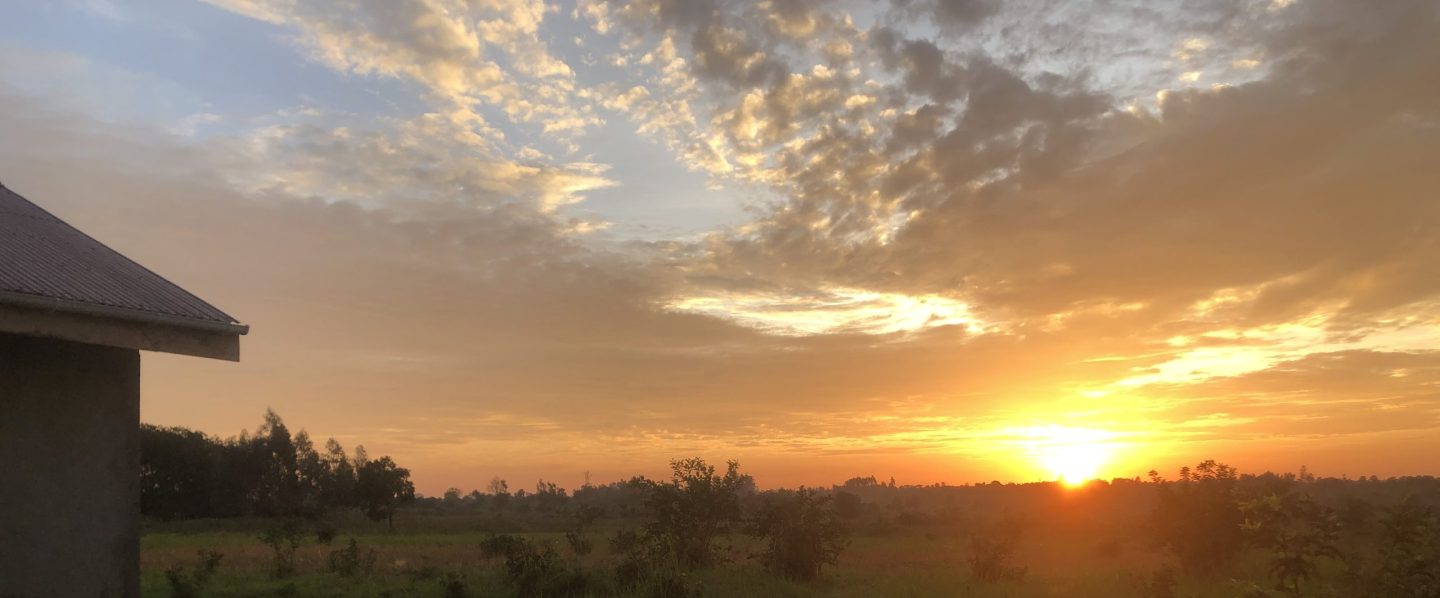
Bijzondere ontmoetingen

Ontmoetingen in het wildpark

In april beleefden we een paar dagen die we niet snel zullen vergeten. Onze vriendin Marieke kwam naar Oeganda, samen met twee vriendinnen met wie zij hier dertig jaar geleden had gewerkt. Voor ons is Oeganda maar een paar uur rijden maar voor de vriendinnen een hele vliegreis! Maar dat hadden ze ervoor over. En wij waren heel blij dat ze gekomen zijn.

We spraken af in een van de mooiste plekken van Oeganda: Murchison Falls National Park. Daar hebben we samen drie prachtige dagen doorgebracht in een safarikamp midden in de natuur. Ik vond het heerlijk om Marieke weer te zien! De grote verrassing moest nog komen. De eerste avond had ze een tafel vol cadeautjes voor ons uitgestald: lieve brieven en kaarten met mooie teksten, chocoladerepen, drop, boeken, enzovoort. We waren helemaal overweldigd. Het bleek dat Marieke een geheime actie daarvoor had gehouden in onze thuisgemeente Sefanja. Het was zo veel dat ik niet goed dat we de tel kwijtraakten. Iedereen die hieraan heeft bijgedragen, Marieke in de eerste plaats, ontzettend bedankt! Het heeft ons diep geraakt.

Met onze eigen auto maakten we prachtige safari door het park. Wat Murchison Falls indrukwekkend maakt is de enorme rijkdom aan dieren. Overal zagen we grote kudden impala’s en andere antilopen, groepen olifanten en buffels, giraffes, bavianen en zelfs een aantal leeuwen in de avondschemering. Mijn hart maakte een sprongetje bij deze waarneming.  Het voelt alsof je in een totaal andere wereld bent: ruig, puur en onaangetast, de wereld van vlak na de schepping!

Een ‘must-do’ is de boottocht op de Victoria-Nijl richting de Murchison Falls. Onderweg zie je een rijkdom aan vogels, veel nijlpaarden en enkele angstaanjagende krokodillen. Uiteindelijk is daar het uitzicht op de Murchison Falls zelf.  Die hebben we later over land ook nog van bovenaf bekeken. Je hebt dan een prachtig uitzicht met regenbogen door de nevel. Wat een enorme kracht gaat er per minuut door deze indrukwekkende watervallen.  

Na drie dagen in dit prachtige park brachten we de drie vriendinnen richting van Kampala. Het afscheid viel zwaar maar we houden kostbare herinneringen aan deze dagen.

Ontmoetingen in Jinja

Onze reis ging door naar Jinja. Het was weer tijd voor een bezoek aan Job en Jennie om het landbouwproject te bespreken en de landbouwmedewerkers verder te trainen. We hebben hier in de eerdere nieuwsbrief al iets meer over verteld. We was bemoedigend om te zien hoeveel de mensen al hadden toegepast van onze training in februari.

Het was heerlijk om even op het ‘Little Angels’ schoolterrein zijn. Het ademt een sfeer van rust, vreugde. Dat merk je als je de kinderen samen ziet spelen en plezier hebben. De school ligt vlakbij de Nijl en daar hebben we dankbaar van genoten: een verse tilapia als lunch en daarna een wandeling langs de rivier.

Na twee dagen begon de lange terugreis: eerst van Jinja naar Arua aan de grens met Congo. Het is een tocht van bijna twaalf uur met druk verkeer en soms gevaarlijke situaties op de weg.  We rijden om de beurt en moeten voortdurend scherp blijven. Na een overnachting in Arua reden we de volgende dag verder naar Amanipi.

Na alle kilometers, ontmoetingen en indrukken waren we vooral dankbaar. Dankbaar voor de mensen die we mochten ontmoeten, voor de bemoedigingen onderweg en bovenal dat God ons op al deze reizen veilig heeft thuisgebracht.

Neema moves up

Just over two years ago, Neema moved to Amanipi as the wife of a police officer. She comes from a different region, but speaks the same language, Lugbarati. It didn’t take long before she became enthusiastic about the 4 Pillars. She signed up as a trainee trainer and immediately stood out: sharp, eager to learn, and quick to grasp the core principles. For the past year, she has also been applying the techniques on her own fields, with visible results. Her dedication did not go unnoticed. She progressed from candidate to trainee, and is now involved in almost every training day in Amanipi.

For Neema, the impact of the 4 Pillars is crystal clear. “Farming has become enjoyable work,” she says. “No more backbreaking labor with a hand hoe. The work is lighter, and I can cwork much more land.” Because her husband is often away for extended periods due to his job, she usually manages the fields on her own. “But with this method, I can handle the work just fine by myself.”

I visit her fields. With a smile, she shows me her land: a neatly planted plot of improved maize and a section with groundnuts. It is the beginning of the rainy season, and the young plants have just emerged. Watching Neema thrive on her landis deeply encouraging, This is the change we long to see.

In addition to working her own fields, Neema also guides a group of young people in a small tree nursery. Proudly, she shows the seedbeds: the coffee seedlings look healthy and have already been transferred into planting bags. The young people are fully committed, and it shows in the results. If progress continues like this, they will be able to transplant their first coffee plants to their own fields in September.

Neema has five children. The two oldest are studying in Aru, a town further away. The three youngest live at home: two boys, Exaucé and Désiré, and Merci, a lively two-year-old girl. During the Easter holiday, they play around the fields while their mother works. Today she is tending the young maize plants. The work is light: because the soil is not plowed, it remains soft and there is less weed growth.

In March, we organized a training for female trainee trainers: three from Amanipi and five from the surrounding region. We started with theory, followed by practical sessions: simple techniques such as sowing beans in straight lines and planting maize seeds in planting holes—all without plowing. The women were surprised by how simple it was, which made them even more eager to apply it on their own fields.

They also practiced explaining the theory themselves. For Neema, this was no challenge: she stands confidently in front of a group. She performs just as strongly in the practical sessions. At the end of the training, her efforts were rewarded: she was promoted to assistent-trainer in the 4 Pillars. Six of the eight trainees reached the same milestone. Two others are still new and will begin applying the methods on their own fields this year. As a visible sign of their new role, all trainers received a cap with the 4 Pillars logo.

Women on the move

We are grateful for this group of female trainers. They make the method more accessible to other women and that is crucial. Women do most of the work in the fields, yet often remain unseen. Thanks to strong examples like Neema and Ange, that is beginning to change: they are opening the way for others.

Our hope is that entire families, men and women together, will apply the 4 Pillars on their fields. This not only makes the work lighter and more enjoyable, but also increases yields and preserves fertile soil for the long term.

Neema groeit door

Ruim twee jaar geleden kwam Neema in Amanipi wonen, als vrouw van een politieman. Ze komt uit een andere streek, maar spreekt dezelfde taal het Lugbarati. Al snel raakte ze enthousiast over de 4 Pijlers. Neema meldde zich aan als kandidaat-trainster en viel meteen op. Ze is leergierig en scherp, en doorziet de essentie meteen. Sinds een jaar past ze de technieken ook toe op haar eigen akkers. Met zichtbaar resultaat. Haar inzet bleef niet onopgemerkt: ze groeide door van kandidaat naar assistent-trainster. Inmiddels is Neema bijna bij elke trainingsdag in Amanipi betrokken.

Voor Neema is het duidelijk wat de 4 Pijlers haar brengen. “Landbouw is nu plezierig werk geworden,” zegt ze. “Geen zwaar gezwoeg meer met een handploeg. Het werk is lichter en ik kan veel meer land bewerken. De opbrengsten zullen omhoog gaan en daarmee houd ik meer geld over voor het gezin.” Omdat haar man vaak voor langere tijd weg is voor zijn werk, staat ze er meestal alleen voor. “Maar met deze methode kan ik het werk ook goed alleen af.”

Ik kom kijken op haar akker. Blij toont ze de pas ingezaaide akkers met verbeterde mais en haar akker met pinda’s. Het is het begin van de regentijd en de jonge plantjes zijn juist opgekomen. Het doet me heel goed om Neema zo bezig te zien op haar akkers. Hier doen we het voor!

Naast haar werk op de eigen akker begeleidt Neema een groep jongeren in een kleine boomkwekerij. Met gepaste trots laat ze de kweekbedden zien: de koffieplantjes staan er gezond bij en zijn al overgezet in plantzakjes. De jongeren werken met inzet, en dat zie je terug in het resultaat. Als deze lijn doorzet, kunnen ze in september hun eerste koffieplanten uitplanten op hun eigen akkers.

Neema heeft vijf kinderen. De twee oudsten studeren in Aru, een stad verderop. De drie jongsten zijn thuis: twee jongens, Exaucé en Désiré, en Merci, een levendig meisje van twee. Tijdens de paasvakantie spelen ze rondom de akker terwijl hun moeder werkt. Vandaag verzorgt ze de jonge maïsplantjes. Het werk is licht: doordat er niet wordt geploegd, blijft de bodem zacht en groeit er minder onkruid.

In maart organiseerden we een training voor kandidaat-trainsters: drie uit Amanipi en vijf uit de omliggende regio. We begonnen met theorie, gevolgd door praktische oefeningen: met simpele technieken bonen zaaien in rijen, maïszaad planten in plantgaten, alles zonder te ploegen en het verbeteren van maiszaad. De vrouwen waren verrast door de eenvoud en daarom enorm gemotiveerd om ermee op hun eigen akkers mee aan de slag te gaan.

Daarnaast oefenden ze met het uitleggen van de theorie. Voor Neema geen enkel probleem, ze staat zelfverzekerd voor een groep. In de praktijktraining blinkt ze net zo goed uit. Aan het einde van de training werd haar inzet bekroond: ze promoveerde tot trainster in de 4 Pijlers. Zes van de acht assistent-trainsters maakten dezelfde stap. Twee anderen zijn nog helemaal nieuw en beginnen dit jaar met het toepassen op hun eigen akkers. Als zichtbaar teken van hun nieuwe rol ontvingen alle trainers en trainsters een pet met het 4 Pijlers-logo.

Vrouwen in beweging

We zijn dankbaar voor deze groep trainsters. Zij maken de methode toegankelijker voor andere vrouwen en dat is hard nodig. Juist zij maken de meeste uren op het land, maar blijven vaak buiten beeld. Dankzij krachtige voorbeelden als Neema en Ange komt daar verandering in, zij openen de weg voor anderen

De drie trainsters uit Amanipi: Nyakuru, Neema en Ange

Onze hoop is dat hele gezinnen, mannen én vrouwen, samen de 4 Pijlers gaan toepassen. Dat maakt het werk niet alleen lichter en plezieriger, maar zorgt ook voor meer opbrengst én een vruchtbare bodem op de lange termijn.

Training Sessions in Amanipi: Empowering Young Farmers

The training

About once a week, our home in Amanipi turns into a training center. We welcome groups of ten to thirty participants, usually by invitation, often after visiting a new community, village, or church. The participants come from a variety of church backgrounds—Catholic, Anglican, evangelical, Pentecostal—or sometimes no church at all. What they share is a common desire: to learn how to improve their farming.

This month we are inviting several tree nursery groups with young people and their supervisors for training sessions. Through the training, these young farmers can already apply the 4Pillars techniques on their fields this year. That not only offers the prospect of a better future but also results in more food and income right away.

A training in one of the other centers

In addition to Amanipi, we have two other training centers, about twenty and forty kilometers from our home. Trainings are held there weekly as well. So far, one of us has always been present. It requires a great deal of travel, but the work brings deep satisfaction.

We start with a Biblical refelction

Today we are hosting a group of young people from a village eight kilometers away. Ten of them arrive, divided over four motorbikes. We begin at eight o’clock with a Bible reflection, a song, and prayer. This is followed by introductions and a short theoretical session.

Then it is time for practice. We move to the training fields around our house, where we demonstrate the 4Pillars in action. The participants carry out various exercises, such as direct seeding without plowing and the hygienic pruning of banana trees. Our trainers, Alio and Anguezu, and our trainers Neema and Nyakuru, guide the practical sessions.

Around ten o’clock we gather again in the training room. We share coffee— in Congo invariably with sugar— and the atmosphere noticeably relaxes. A few jokes are exchanged and experiences are cautiously shared. After coffee, the trainers provide additional theory in Lugbarati, the language of this ethnic group, and participants have the opportunity to ask questions. This is followed by more practical exercises in the fields. The tree nursery also receives considerable attention. Interest is high, not only in the coffee seedlings but also in other trees such as Calliandra, a valuable shade tree that is also suitable for construction wood and firewood.

Participants collecting seeds of the Calliandra tree

By the time all topics have been covered, it is almost noon. Lunch is ready. We eat together, usually fufu (a firm porridge made from cassava flour) and/or rice with beans, all grown on our own fields. It is highly appreciated food here. During the meal everyone is quiet, fully absorbed in eating. Only afterwards do the conversations resume.

Trainer Anguezu explains it in the local language

After a few closing words, the participants return home. Each time a group completes the training, we feel a sense of fulfillment. At the same time, we know that the training is only truly successful when participants apply it in practice back home. Follow-up visits are therefore essential.

Behind the Scenes

And who prepares the coffee and the meal? Two women: our regular helper Ayikuru and her assistant Esther. I keep a discreet eye on things from a distance. At half past seven the fire is lit. The beans, soaked overnight, go straight onto the fire. A large kettle of water for the coffee is set to boil, and the onions and tomatoes are chopped.

Ayikuru stokes the fire under the coffee kettle and the pot of beans

Ayikuru and Esther have built up solid experience and carry out their work with enjoyment. In the beginning I occasionally had to prompt them— “It’s already ten o’clock, where is the coffee?” That is no longer necessary; everything is ready effortlessly and on time. Sometimes there is just enough food; often there are leftovers, which are carefully divided among the trainers and the cooks.

Ayikuru and Esther

We are deeply grateful for this team. Without them, a training day would simply not be possible.

Een trainingsdag in Amanipi

De training

Ongeveer een keer per week verandert ons huis in Amanipi in een trainingscentrum. Dan ontvangen we groepen van tien tot dertig mensen. Ze komen op uitnodiging, vaak nadat we een een nieuwe community, dorp of kerk hebben bezocht. De deelnemers verschillende kerkelijke of achtergronden: katholiek, anglicaans, evangelisch of pinkster of geen kerk, maar delen dezelfde wens: leren hoe ze hun landbouw kunnen verbeteren. Deze maand nodigen we telkens enkele boomkweekgroepen met jongeren en hun begeleiders uit voor een training. Door de training kunnen de jongeren al dit jaar de 4pijler technieken op hun akkers toepassen. Dat biedt niet alleen uitzicht op een betere toekomst maar levert direct meer voedsel en inkomsten. 

Training in een naburig trainingcentrum bij pastor James

Naast Amanipi hebben we twee andere trainingscentra, ongeveer twintig en veertig kilometer van ons vandaan. Daar worden ook wekelijks trainingen gehouden. Tot nu toe is er altijd iemand van ons bij. Dat betekent veel reizen, maar het werk geeft ook veel voldoening.

We beginnen met een bijbeloverdenking

Vandaag ontvangen we een groep jongeren uit een dorp van acht kilometer verderop. Met tien mensen komen ze aan, verdeeld over vier brommers. We beginnen om acht uur met een Bijbeloverdenking, een lied en gebed. Daarna volgt een voorstelrondje en een korte theoretische introductie. Dan is het tijd voor de praktijk. We verplaatsen ons naar de trainingsakkers rond ons huis. Hier laten we de 4Pijlers in de praktijk zien. De cursisten doen verschillende oefeningen zoals direct zaaien zonder te ploegen of het hygiënisch snoeien van bananenbomen. Er zijn altijd mensen in de groep die graag als eerste iets willen proberen. Je pikt ze er zo uit. Onze trainers, Alio en Anguezu en trainsters, Neema, Nyakuru begeleiden vandaag de oefeningen.

Rond tien uur komen we weer samen in de trainingsruimte. We drinken samen koffie, in Congo steevast met suiker, en de sfeer wordt merkbaar losser. Er worden al wat grapjes gemaakt en voorzichtig ervaringen gedeeld. Na de koffie geven de trainers wat aanvullende theorie in het Lugbarati (de taal van deze etnische groep) en kunnen de cursisten vragen stellen. Vervolgens zijn er weer wat praktijkoefeningen op de akkers. Ook de boomkwekerij krijgt ruime aandacht. De belangstelling is groot, niet alleen voor de koffieplantjes maar ook voor de andere boompjes zoals Calliandra, een waardevolle schaduwboom en die bovendien geschikt is als constructiehout en brandhout.

De deelnemers verzamelen zaad van de Calliandra boom

Als alle onderwerpen aan bod zijn geweest is het bijna twaalf uur. Dan staat het eten klaar. We eten samen, meestal foefoe (een stevige brij van cassavemeel) en/of rijst met bonen, alles van onze eigen akkers. Dat is hier zeer gewaardeerd voedsel. Tijdens het eten is iedereen stil. De mensen gaan helemaal op in de maaltijd. Pas daarna komen de gesprekken weer op gang.

Theorieles van Anguezu in de trainingsruimte

Na enkele afscheidswoorden gaan de cursisten weer naar huis. Het geeft ons telkens een voldaan gevoel als er weer een groep is getraind. Tegelijk weten we dat de training pas echt geslaagd is als de deelnemers het thuis in praktijk brengen. Daarvoor zijn vervolgbezoeken essentieel.

Ayikuru stookt het vuur op onder de bonen en het koffiewater

Achter de schermen

En wie zorgt er nu voor die koffie en het eten? Dat zijn twee dames: onze vaste hulp Ayikuru en haar assistente Esther. En ik houd op afstand een oogje in het zeil. Om half acht wordt het vuur opgestookt. De bonen, die ’s nachts al in de week zijn gezet, gaan direct op het vuur. Ook een grote ketel water voor de koffie wordt opgezet. En vervolgens worden de uien en tomaten gesneden. Ayikuru en Esther hebben al een ruime ervaring opgebouwd en doen hun werk met plezier. In het begin moest ik hen nog wel eens wat aansporen: “Het is al tien uur, waar blijft de koffie?”  Dat is niet meer nodig, alles staat moeiteloos op tijd klaar. Soms is er precies genoeg eten maar vaak is er wat over. Dat wordt dan keurig verdeeld onder de trainers en kooksters die het meenemen voor de kinderen thuis.

Ayikuru en Esther

We zijn heel dankbaar voor dit team. Zonder hen zou een trainingsdag niet mogelijk zijn!

Teenage mothers

Around Amanipi, teenage motherhood is common. We have also seen it throughout the wider area around Lanza. In rural communities, it seems to be more the rule than the exception. This phenomenon continues to occupy my thoughts. What causes girls to become mothers at such a young age? And what are the consequences for the girl and her child? We are speaking about teenage girls like Asheni and Naomi in Lanza, and Alesi and Esther in Amanipi—each with her own dreams and vulnerabilities.

Asheni in Lanza

Why do girls become mothers so young?
Poverty plays a major role. Many families struggle to make ends meet, which makes girls vulnerable to young men who promise money and prosperity. For many, the temptation to escape poverty through sexual relationships is irresistible.

Naomi met haar baby in Lanza

There is another, deeply rooted cause. From a very young age, girls grow up with the idea that motherhood is the most important purpose of a woman. Having a child brings respect, recognition, and a place in the community. Toddlers of two already walk around with a doll tied to their back, just like their mother with a baby. Five-year-old girls carry their younger brother or sister on their backs. Teenage girls long to become mothers themselves, even though they are not yet physically, emotionally, or spiritually ready. “Arranging” a pregnancy is not difficult. In the area around Amanipi, there are regular night parties with plenty of alcohol. The result is many unprotected sexual encounters, and before long, the pregnancy is a fact.

The consequences
The consequences of an early pregnancy are far-reaching, first and foremost for the teenage girl. Yes, she has what she wanted and can look forward to motherhood. But that fulfillment comes at a high price. To begin with, she must leave school, losing the opportunity to continue her education. Her health is also at risk because her body is not yet fully developed. Some girls experience severe complications, sometimes even with fatal outcomes. In addition, unprotected sex exposes her to sexually transmitted infections and HIV/AIDS.

Her child also bears the consequences. The father of the child—if he is known at all—often does not take responsibility. The child grows up without knowing his or her own father. The teenage mother is left to fend for herself and usually remains living with her parents. Grandparents then carry the burden of several grandchildren, alongside their own children. After the first child, more often follow. The chance of an official marriage becomes increasingly small. She is no longer a teenage mother, but a single mother. These children are more likely than others to suffer from illness, malnutrition, and lack of education. In this way, a vicious cycle of poverty and vulnerability continues. It is heartbreaking to witness. We see it happening all around us, in the lives of Alesi, Esther, Taabo, and many other girls in the neighborhood. It occurs in almost every family, including that of the pastor. They have taken four grandchildren into their household.

Single mother Alesi with her two children

What can we do?
Through the 4Pillars tree nursery project, we seek to give these girls hope and a future. They plant their own coffee trees and other crops. Over time, this enables them to become financially independent. Alesi, who planted her own coffee seedlings, is one such example.

In addition, education from the church is vitally important. We believe that every human being is created by God and precious in His sight. Therefore, we are called to protect, guide, and offer hope to girls and young women. Girls may discover that God has a plan for their lives that reaches beyond premature motherhood. The church has an important role in teaching biblical values about love, sexuality, and responsibility—openly and with grace. Our pastor in Amanipi asked me to provide teaching on this topic during the youth service, which I did with joy and conviction. I have been invited again to address this subject at the upcoming church conference.

Couple David and Estella with their baby

It is important for young people to understand that marriage is God’s original plan. The value of a woman does not lie solely in having children, but first and foremost in the fact that she is a beloved child of God. Motherhood is precious, but at the right time—in God’s time. Then, together with her husband, she can bear responsibility for the children and offer them a better future.

We are grateful that we may contribute, in our own small way, to hope for teenage mothers and to education on these complex and sensitive issue

James, Pastor and Tree Grower

Pastor James is sixty-nine, but retiring is not on his mind! In his church, located in a village about 20 kilometers from Amanipi, he dedicates himself to evangelism and to caring for orphans and widows.

Twenty years ago, it seemed his life was over: stomach cancer! The doctors could do nothing for him. He turned to traditional herbal medicine, and recovered! “God gave me my life back,” he says. From that moment on, James knew he wanted to devote himself to helping vulnerable people: orphans, widow and to spreading the Gospel.

After his long illness, his strength was greatly diminished. Working large fields by hand was no longer possible, and he owned only a small plot of land. How would he make a living? James found an unexpected path: he began growing trees: coffee and cocoa, as well as timber species like eucalyptus and teak. People around him didn’t understand: What do you want with trees? You can’t eat them! But the sale of coffee and cocoa brought him a good income.

As James watched the surrounding forests disappear, he became even more convinced of the need for reforestation. He knew God had a purpose in this. In 2016, he had a dream in which God told him that one day someone would come to help him with his project. People laughed at the idea. In the area, he became known as Pépiniériste James (James the Grower).

And then we met him. Earlier this year, we visited him to ask if he could help us start small coffee nurseries for untrained youth and single mothers. James’s eyes lit up, this was exactly his dream. The dream became reality. Everything came together: helping vulnerable people and growing trees. For us, it was deeply inspiring to meet someone whose vision matched our own.

Drawing on his experience, James quickly gathered several groups of more than twenty people each. He guides them in their work and keeps careful attendance records in a notebook, who shows up to help build the nurseries, for example. Regularly, he rides over on the back of his son’s motorbike taxi to bring us updates. Each time, I’m amazed by his vision and dedication.

The groups have been working hard to prepare the land and build the greenhouses. Together with James, we visit the site, a valley with water available year-round for growing plants. As we carefully make our way through the marshy ground, James darts ahead of us like a young deer. The frame of the greenhouse is already built; now the shade cloth can be stretched over it, and the coffee seeds are ready to be sown. James shows us how it’s done. It will take two months before the seedlings emerge, and they’ll need to be watered daily if there’s no rain. It requires patience and steady dedication.

We walk back to James’s house, this time uphill but again he strides ahead energetically, greeting people along the way. What energy! His wife, Yabeze, comes out to meet us with a broad smile. “James’s work with coffee, cocoa, and trees is a blessing,” she says. “It provides well for us.” She tells us about their ministry in the church and their six children. One has passed away, the others are grown. Do they also grow trees? “No,” she laughs. “Some drive motorcycle taxis, the eldest is a nurse.” James and Yabeze live on the same compound with one of their sons, and their grandchildren play around the house.

We are deeply thankful to God for the privilege of working alongside Pépiniériste James. He now mentors five groups in the tree nursery project of the 4Pillars.

James, voorganger en boomkweker

Voorganger James is negenenzestig jaar, maar stoppen met werken daar denkt hij niet aan! In zijn kerk in een dorp, ongeveer twintig km vanaf Amanipi, zet hij zich in voor evangelisatie en de zorg voor wezen en weduwen.

Twintig jaar geleden leek zijn leven voorbij, de diagnose: maagkanker! De artsen konden niets voor hem doen. Hij wendde hij zich tot de plaatselijke kruidengeneeskunde, en genas!  “God heeft me mijn leven teruggegeven.”, zegt hij. Vanaf dat moment wist James dat hij zich wilde inzetten voor kwetsbare mensen en de verspreiding van het evangelie.

Door het langdurige ziekbed was zijn kracht aanzienlijk afgenomen. Grote akkers met de hand bewerken was niet meer mogelijk. Ook was er maar weinig land beschikbaar. Hoe moest hij nu de kost verdienen? James vond een verrassende weg: hij ging bomen kweken: koffie en cacao en bomen voor timmerhout, zoals eucalyptus en teak. De mensen om hem heen begrepen er niets van: wat moet je nu met die bomen? Die kun je toch niet eten? Maar de verkoop van koffie en cacao leverde hem een goed inkomen.

Het schaduwdoek op maat knippen

James zag ook de bossen om hem heen verdwijnen, dat versterkte zijn idee om zich in te zetten voor herbebossing. Hij wist dat God hier een plan mee had. In 2016 kreeg hij een droom waarin God zei: op zekere dag zal er iemand langskomen die jou gaat helpen bij dit project. De mensen lachten erom. In de buurt staat hij bekend als Pépiniériste James (James de kweker).

de kweekkas

En toen kwamen wij op zijn pad. Begin dit jaar zochten we hem op met de vraag of hij ons kon helpen met het opzetten van koffie kwekerijtjes voor jongeren zonder opleiding en alleenstaande moeders. James’ ogen begonnen te glimmen: dit was precies zijn droom. De droom werd werkelijkheid. Alles kwam nu samen: de kwetsbare mensen en het kweken van bomen. Voor ons was het heel motiverend om iemand met deze visie te ontmoeten, dit was ook onze visie!

James bevestigt het schduwdoek

Met zijn ervaring verzamelde James in korte tijd enkele groepen van meer dan twintig mensen. James begeleidt hen bij het werk en in een schrift houdt hij nauwkeurig bij wie er aanwezig zijn bij het groepswerk, zoals het bouwen van de kweekkassen. Regelmatig komt hij achterop de brommertaxi van zijn zoon bij ons langs om rapport uit te brengen. Elke keer sta ik versteld van de visie en ijver van deze man.

James demonstreert hoe je koffie zaait

De groepen zijn hard aan het werk gegaan met het klaarmaken van het terrein en het bouwen van de kweekkassen. Samen met James bezoeken we die plaats, een vallei waar het hele jaar genoeg water is om planten te kweken. Terwijl wij voorzichtig onze weg zoeken door het moerassige land, snelt James voor ons uit als een jong hert. De ‘kas’ is al getimmerd, nu kan het schaduwdoek eroverheen worden gespannen en het koffiezaad is klaar om te worden gezaaid. James laat ons zien hoe je het zaait. Twee maanden zal het duren voordat de koffieplantjes opkomen. Ondertussen moeten ze dagelijks begoten worden als het niet regent. Dat vraagt veel geduld en toewijding.

We lopen weer terug naar James’ huis, deze keer de heuvel op, maar James loopt weer net zo onvermoeibaar voor ons uit, terwijl vrolijk hier en daar wat mensen begroet. Wat een energie!  Zijn vrouw Yabeze komt ons tegemoet met een brede glimlach. “Het werk van James met koffie, cacao en bomen is een zegen,” zegt ze. “We kunnen er goed van leven.” Ze vertelt over hun werk in de kerk en over hun zes kinderen: één kind is overleden, de anderen zijn volwassen. Kweken zij ook bomen? Nee, dat niet, sommigen rijden brommertaxi, de oudste werkt als verpleegkundige. James en Yabeze wonen met een van hun zoons op hetzelfde erf. Rond hun huis spelen de kleinkinderen.

We zijn God diep dankbaar dat we met ‘Pépiniériste James’ mogen samenwerken. Hij begeleidt in totaal vijf groepen in het boomkweek project van de 4Pijlers.

Esther

Esther is only twenty, yet already the mother of a bright-eyed little girl who is almost one. In Amanipi and the villages nearby, she is just one of many young women carrying the heavy weight of early motherhood. Her daughter is called Maisha—Swahili for “life.” The name fits her perfectly: lively, curious, and full of energy.

Esther is only twenty, yet already the mother of a bright-eyed little girl who is almost one. In Amanipi and the villages nearby, she is just one of many young women carrying the heavy weight of early motherhood. Her daughter is called Maisha—Swahili for “life.” The name fits her perfectly: lively, curious, and full of energy.

To keep herself and Maisha afloat, Esther takes whatever day jobs she can find—sometimes for neighbors, sometimes for us. The pay is meager, but it is enough to scrape by. Today, she is with us, filling plant bags for seedlings of Cassia, Calliandra, Leucaena, and coffee. The work is repetitive, but Esther doesn’t mind. Work means income, and for her, every little bit counts.

Her life is split in two. Part of the time she stays with her in-laws, tending a small plot where she hopes to grow beans. The rest of the time she walks the long hour back to her parents’ village, Maisha strapped to her back. Wherever Esther goes, her daughter goes too—the two are inseparable.

One day I walk with Esther to her field. She shows me the ground she has worked with her hoe. Three full days of labor, and still only a small corner is done. The soil is rock-hard, exhausted, refusing to give. The yield will be poor, and the sight is disheartening. If only she had known the 4Pillar method—sowing without plowing—it could have saved her endless sweat and toil.

Still, Esther presses on. In June, she planted forty coffee seedlings on her parents’ land. Twelve have withered already, and she longs to replace them. Soon, she will join a group of young people and mothers in her village to start a small nursery. Together they will raise their own coffee plants and trees, while learning new farming skills through the 4Pillar method. Esther is eager to try—hopeful that one day her land will provide more than it does now.

Her dreams are simple, yet powerful: to raise Maisha well, to keep her fed, and to one day send her to school. For now, survival still dictates her days—food, clothing, safety. But with coffee and the 4Pillar method, she dares to imagine a steadier income. More than anything, she longs for security, and prays that Eyobo will change, becoming a father and partner she can count on. “Only then,” Esther says quietly, “can I truly think about the future.”

It is our prayer too—for Esther, and for Maisha. Because no one should have to live like this.

Esther

Esther is twintig jaar en moeder van een dochtertje van bijna een jaar. Ze is een van de vele jonge moeders in Amanipi en omgeving. Haar dochtertje heet Maisha – Swahili voor “leven”. Het is een schattig en levendig meisje. Esther raakte zwanger en verliet de lagere school na de vijfde klas. Ze was toen al negentien jaar. Daarmee kwam er abrupt een einde aan haar schooltijd. Ze trok in bij de vader van haar kind, Eyobo uit Amanipi. Maar de relatie loopt niet goed. Ze hebben vaak onenigheid. Eyobo drinkt regelmatig en gebruikt blaadjes van de Quat-plant, een lokale softdrug. Die combinatie maakt hem agressief en dan slaat hij Esther. Eyobo helpt haar ook niet op het land. Esther voelt zich niet veilig en staat er alleen voor.

Ze heeft vaak baantjes als dagloner, bij anderen of soms bij ons. Zo verdient ze net genoeg om zichzelf en Maisha te onderhouden. Vandaag helpt ze ons met het vullen van plantzakjes, waarin straks boompjes komen van Cassia, Calliandra, Leucaena en koffie. Het is eentonig werk, maar Esther vindt het helemaal niet erg. Werk is werk, en hoe meer ze kan doen, hoe beter.

Esther leeft nu in twee werelden. Ook al gaat het moeizaam, ze wil haar relatie nog een kans geven. Een deel van de tijd verblijft ze op het erf van haar schoonfamilie waar ze een akker heeft om bonen te zaaien. De rest van de tijd woont ze weer bij haar ouders. Om vanaf haar dorp naar Amanipi te komen, loopt ze een uur met Maisha op haar rug. Moeder en dochter zijn onafscheidelijk.

Samen met Esther loop ik naar haar akker. Esther heeft er een deel ervan met de hak omgewerkt. Drie dagen lang heeft ze gezwoegd op dat stukje land. En dan is er nog maar een heel klein stuk gedaan. De grond is keihard en uitgeput en zal maar weinig gaan opleveren. Het is om moedeloos van te worden! Jammer dat ze de 4Pijler methode nog niet kende: zaaien zonder te ploegen. Dat had haar heel veel werk bespaard!

Toch zet Esther door. In juni plantte ze veertig koffiezaailingen op het land van haar ouders. Twaalf zijn inmiddels gestorven; die wil ze vervangen zodra dat weer kan. Binnenkort start ze samen met jongeren en jonge moeders in haar dorp een klein kwekerijtje. Daar zaaien ze koffie en andere bomen die ze nodig hebben. Daarnaast krijgen ze training in de 4Pijler-methode. Esther wil dat graag leren, zodat haar akker straks meer kan opleveren.

Haar dromen zijn eenvoudig, maar krachtig. Ze wil Maisha goed opvoeden, genoeg eten op tafel en later goede scholing voor haar dochter. Maar voorlopig draait alles nog om de dagelijkse strijd: zorgen voor voedsel, kleding en veiligheid. Met de opbrengst van de koffie en de 4Pijler-methode hoopt Esther op een beter inkomen. Ze verlangt naar zekerheid en bidt dat Eyobo toch weer een steun voor haar en Maisha zal worden. Pas dan, zegt Esther, kan ze echt aan de toekomst denken.

En dat is ook ons gebed – voor Esther en voor Maisha. Want dit is toch geen leven!